
In an undergraduate chemistry class, a mechanism often becomes difficult at the point where a pair of electrons splits. Students may recognize the product but be unsure how a radical intermediate was formed or where the next bond comes from. I find that slowing down the electron bookkeeping helps make the reaction easier to follow and question.
Give each arrow a job
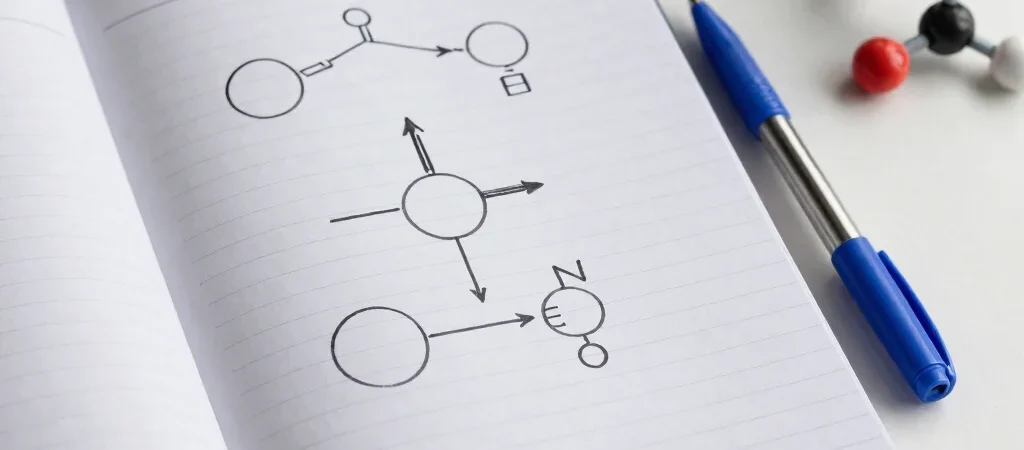
In radical steps, a single-headed arrow tracks the movement of one electron; a double-headed curved arrow tracks a pair. Asking students to name the electron being moved before drawing the arrow can prevent a common confusion between radical and polar mechanisms. The drawing should show a chemically meaningful change, not simply decorate the page.
Check atoms and electrons
After each proposed step, pause to check which bonds have formed or broken and whether the electron count and charge remain sensible. For a radical intermediate, mark the unpaired electron explicitly before moving on to the next step. This small routine is useful when comparing a plausible chain propagation step with a termination step.
Make room for questions
A mechanism is a proposal that must be consistent with evidence, not a picture that becomes true because it is neatly drawn. In teaching materials, I try to distinguish what an experiment establishes from what a mechanism suggests. That distinction gives students permission to ask what observation would support or challenge a step.
When revisiting a difficult reaction, redraw it with one change per step and annotate the electron movement before naming the intermediate. The result may take a little more space in your notes, but it is easier to inspect, explain, and correct.